

Prosthetics: The past, the present and the future
By Taylor Lyons
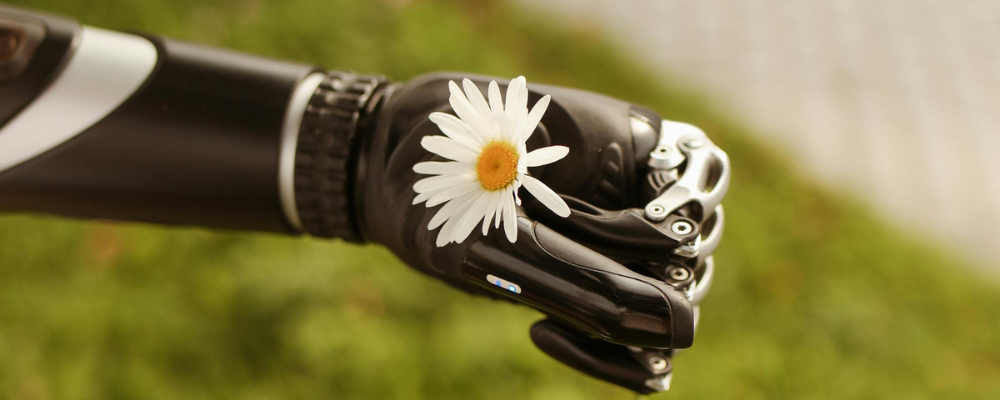
The idea of replacing a lost limb with a functional artificial one has existed for centuries, but the technology behind prosthetics has evolved dramatically. What began as simple wooden or metal devices designed for balance and appearance has transformed into sophisticated bionic systems powered by robotics, sensors, and artificial intelligence.
Today, prosthetics are not just restoring mobility; they are redefining how humans interact with machines and with their own bodies.
The past
For much of history, prosthetics were basic mechanical devices with limited functionality.
Early prosthetic limbs date back thousands of years. One of the oldest known examples is a wooden prosthetic toe discovered in ancient Egypt, dating to around 1000 BCE. These early devices were largely cosmetic or designed to help with basic balance rather than complex movement.
It was not until the aftermath of major conflicts such as the American Civil War and the World Wars that prosthetic innovation accelerated. Large numbers of injured soldiers created urgent demand for better artificial limbs.
By the mid-20th century, prosthetics had begun incorporating mechanical joints and harness systems that allowed users to control movement through body motion. One of the pioneers of modern prosthetics, Ottobock, was founded in 1919 and helped industrialise prosthetic production for injured veterans.
Despite these advances, prosthetics at the time were still fundamentally mechanical. They restored some movement, but fine motor control and natural motion remained largely impossible.
The present
Modern prosthetics have undergone a technological revolution. Today’s devices combine robotics, microprocessors, sensors, and advanced materials to replicate natural movement more accurately than ever before.
One of the most exciting developments is the emergence of brain-controlled prosthetics. Companies like Blackrock Neurotech have developed implantable neural interface systems that allow patients with paralysis to control computers and robotic limbs using signals from their brain.
In upper-limb prosthetics, companies like Open Bionics are developing lightweight robotic hands that respond to muscle signals. Their Hero Arm, a multi-grip myoelectric prosthetic arm, received CE marking in Europe and FDA 510(k) clearance in 2020, making advanced bionic arms more accessible.
These developments have dramatically improved mobility and quality of life for people living with limb loss.
The future
Looking ahead, prosthetics are moving toward even deeper integration with the human body.
One of the most promising areas of research involves neural interfaces, where prosthetic limbs communicate directly with the nervous system. Scientists are developing systems that allow prosthetics to send sensory feedback back to the brain, enabling users to feel pressure or texture through artificial limbs.
Companies such as Neuralink are developing brain-computer interface technologies that could eventually allow prosthetics to be controlled directly by neural signals rather than muscle contractions. Artificial intelligence could also allow prosthetic limbs to learn a user’s movement patterns over time, predicting intent and responding faster and more naturally.
Some researchers are even exploring the possibility that future prosthetics could surpass biological limbs in certain capabilities. Enhanced strength, endurance, and precision could allow prosthetics not only to restore lost function but potentially extend human capability beyond its natural limits.
As these technologies progress, regulatory oversight will remain critical. Medical device authorities such as the FDA and European regulators under MDR will continue to play an essential role in ensuring that new innovations remain safe, effective, and ethically deployed.
Why it matters
Prosthetic technology is ultimately about restoring independence and improving lives.
Behind every breakthrough are the engineers, clinicians, researchers, and leaders pushing the field forward. The technology itself is impressive, but without the right people developing and scaling these innovations, progress would stall.
Bringing together the best talent in robotics, neuroscience, software, and medical devices will be essential to unlocking the next generation of prosthetic technologies.
If we can bring together the people who see not just what prosthetics can do today, but what they could do tomorrow, then the next breakthroughs may transform how we restore mobility and human capability. If you’re working with or looking to join some of the world’s leading MedTech companies developing advanced prosthetics, I’d love to hear from you. The next innovation won’t happen without the right people behind it.
About the author
Taylor Lyons is a Recruitment Consultant at Aspire Life Sciences. He specialises in bridging the gap between talented professionals and leading companies within the MedTech sector across Europe and the Middle East. With a keen focus on the nuances of Medical Device Regulation (MDR), he brings a strategic approach to recruitment, ensuring that both candidates and organisations are aligned across compliance, skills, and cultural fit.
If you’re looking for a new career opportunity or seeking the right addition to your team, contact taylor.lyons@aspirerecruitmentgroup.com.



Leave a Reply